
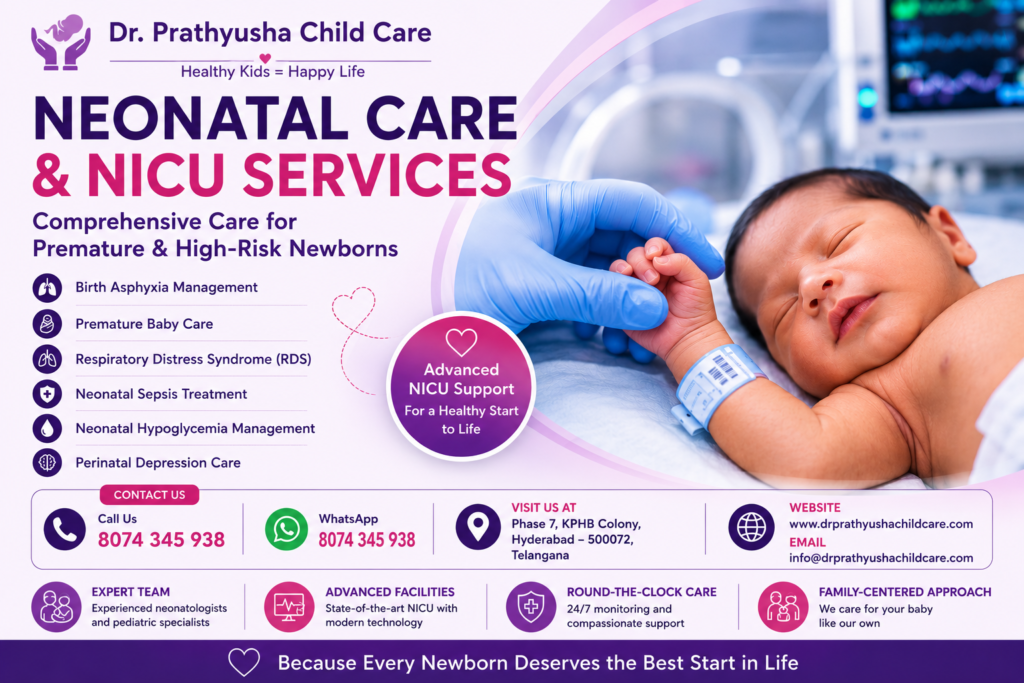
The birth of a baby is one of life’s most precious moments. While most newborns transition smoothly into life outside the womb, some require specialized medical attention to ensure a healthy start. Neonatal care focuses on diagnosing, monitoring, and treating newborn infants, particularly those born prematurely or with medical complications.
At our neonatal care unit, we provide advanced medical support for premature babies, high-risk newborns, and infants facing critical health challenges during their first days of life.
What is Neonatal Care?
Neonatal care refers to specialized medical care provided to newborn infants, especially those who are born prematurely, have low birth weight, experience birth complications, or develop medical conditions shortly after birth. These babies may require monitoring and treatment in a Neonatal Intensive Care Unit (NICU), where expert neonatologists and pediatric specialists provide round-the-clock care.
Premature Delivery and Premature Baby Care
Premature delivery occurs when a baby is born before 37 weeks of pregnancy. Premature infants often have underdeveloped organs and may face difficulties with breathing, feeding, temperature regulation, and immunity.
NICU support helps premature babies by providing:
Respiratory support
Nutritional management
Temperature control
Infection prevention
Continuous monitoring of vital signs
Early intervention significantly improves outcomes for premature infants.
Birth Asphyxia: Early Recognition and Treatment
Birth asphyxia occurs when a baby does not receive enough oxygen before, during, or immediately after delivery. This condition can affect vital organs, including the brain, heart, and kidneys.
Common signs include:
Difficulty breathing
Poor muscle tone
Low heart rate
Weak crying
Prompt neonatal intervention and advanced NICU support can help reduce long-term complications and improve recovery.
Respiratory Distress Syndrome (RDS) in Newborns
Respiratory Distress Syndrome (RDS) is a common breathing disorder among premature babies. It occurs when the lungs lack sufficient surfactant, a substance that helps keep air sacs open.
Symptoms may include:
Rapid breathing
Grunting sounds
Chest retractions
Bluish skin discoloration
Treatment options include oxygen therapy, CPAP support, ventilator assistance, and surfactant replacement therapy.
Maternal Chorioamnionitis and Its Impact on Newborns
Maternal chorioamnionitis is an infection of the membranes surrounding the baby during pregnancy. This infection can increase the risk of neonatal complications, including sepsis and respiratory issues.
Babies born to mothers with chorioamnionitis often require close observation, laboratory testing, and preventive antibiotic treatment to ensure their safety.
Neonatal Sepsis: A Serious Newborn Infection
Neonatal sepsis is a potentially life-threatening bloodstream infection that affects newborn infants. Early diagnosis and treatment are essential to prevent severe complications.
Symptoms may include:
Poor feeding
Lethargy
Temperature instability
Breathing difficulties
Irritability
Advanced neonatal care includes blood investigations, antibiotic therapy, and continuous monitoring in the NICU.
Neonatal Hypoglycemia: Managing Low Blood Sugar
Hypoglycemia refers to low blood sugar levels in newborn babies. It is more common in premature infants, babies of diabetic mothers, and low-birth-weight newborns.
Possible symptoms include:
Poor feeding
Jitteriness
Weak cry
Seizures in severe cases
Timely diagnosis and treatment help prevent neurological complications and support healthy development.
Perinatal Depression in Newborns
Perinatal or neonatal depression refers to a newborn’s reduced responsiveness immediately after birth, often due to oxygen deprivation, difficult labor, or maternal complications.
Early assessment and neonatal resuscitation play a vital role in stabilizing the baby and preventing further complications.
Why Choose Specialized NICU Care?
A modern NICU provides:
Advanced respiratory support
Continuous monitoring
Infection management
Neonatal emergency care
Premature baby care
Family-centered support
Expert neonatologist supervision
These services ensure that vulnerable newborns receive the highest standard of medical care during their critical early days.
Conclusion
Newborns with conditions such as premature delivery, birth asphyxia, respiratory distress syndrome, neonatal sepsis, hypoglycemia, and perinatal complications require specialized neonatal care. Early diagnosis, expert medical management, and comprehensive NICU services can significantly improve outcomes and support healthy growth and development.
If your baby requires specialized newborn care, consulting an experienced neonatologist and accessing advanced NICU facilities can make a life-changing difference.